ok ale mimo wszystko pozwolenie na wsadzenie sobie penisa w zad to troche powazniejsza sprawa niz zajaranie, a jesli mowa o facecie ktory tego doswiadcza to juz na pewno nie jest to normalne tak jak jednorazowy papieros.
nie wiem o co ci chodzi z tym "poważniejsza" i "normalne", ale ja miałem na myśli to, że ryzyko zależy zarówno od typu zachowań jak i ich częstotliwości
co do stronki wiki ktora cytujesz to znalazlam tam cos jeszcze:
Some of the book's findings are outdated.[40][41][42] Homosexualities is the study most commonly cited to prove that gay men are sexually promiscuous, but it was not based on a broad sample, and a more recent and extensive University of Chicago study, Edward O. Laumann et al.'s The Social Organization of Sexuality: Sexual Practices in the United States, produced different results.[43] Laumann et al. found that homosexual and bisexual men reported an average of 3.1 sex partners in the previous 12 months,
tak wiec wychodziloby na to ze z tymi setkami partnerow per gay capita to troche przesadziles. to ze takie jednostki sie zdarzaja to nie znaczy ze kazdy homo jest rozwiazly (a juz zwlaszcza gdy ma stalego partnera)
Zauważ, że ja napisałem o całkowitej ilości partnerów, a ty o ilości w ostatnim roku. To są dwie różne statystyki. Za poprzednim badaniem:
Much sex between men took place between strangers, met in baths or bars.
A sam Laumann, którego badania przytaczasz napisał:
There is an extremely low rate of sexual fidelity among homosexual men as compared to married heterosexuals. Among married females 85% reported sexual fidelity. Among married men, 75.5% reported sexual fidelity. Among homosexual males in their current relationship, 4.5% reported sexual fidelity.
Jeśli założyć, że gej ma co roku 2 - 3 nowych partnerów, co w przeciągu np 40 lat daje 80 - 120.
Zaledwie 4.5% gejów mówi, że jest wierna. Jak jest naprawę nie wiadomo, ale liczba pewnie i tak pomijalna. Bez straty ogólności można stwierdzić, że monogamiczność i wierność wśród gejów to mit.
Tuż po zacytowanym przez ciebie kawałku jest interesujący fragment, który pominęłaś:
Some of the book's findings are outdated.[40][41][42] Homosexualities is the study most commonly cited to prove that gay men are sexually promiscuous, but it was not based on a broad sample, and a more recent and extensive University of Chicago study, Edward O. Laumann et al.'s The Social Organization of Sexuality: Sexual Practices in the United States, produced different results.[43] Laumann et al. found that homosexual and bisexual men reported an average of 3.1 sex partners in the previous 12 months, which was well above the 1.8 reported by heterosexual men, but far fewer than was the norm in some urban gay communities in the pre-AIDS era.[44] The AIDS epidemic, which began after Homosexualities was published, has probably made its picture of gay sexual behavior obsolete.[45]
Sugeruje to, że w czasach badań Bella i Weinberga geje zachowywali się inaczej, bo nie bali się syfa. Dopiero epidemia AIDS wśród społeczności gejowskiej włączyła im hamulce. Ale i tak mają wielokrotnie większą tolerancję na ryzyko niż osoby hetero.
Poza tym są różnice w próbkach. Jest jeszcze np kolejne badanie: http://www.jstor.org/stable/3813477?seq=1
A Comparative Demographic and Sexual Profile of Older Homosexually Active Men
Paul Van de Ven , Pamela Rodden , June Crawford and Susan Kippax
The Journal of Sex Research
Jest to badanie znacznie nowsze od dwóch pozostałych, bo z 1997 roku. Napisano o tym:
In their study of the sexual profiles of 2,583 older homosexuals published in Journal of Sex Research, Paul Van de Ven et al. found that "the modal range for number of sexual partners ever [of homosexuals] was 101–500." In addition, 10.2 percent to 15.7 percent had between 501 and 1000 partners. A further 10.2 percent to 15.7 percent reported having had more than 1000 lifetime sexual partners.
Skąd się biorą różnice nie mam pojęcia, ale tak czy siak mówiłem o ogólnej ilości partnerów, a nie ilości w ciągu ostatniego roku. W przypadku osób hetero może się spokojnie zdarzyć np tak, że facet przez 10 lat ma jedną żonę i jedną kochankę, więc średnio wyjdzie mu jedna piąta nowej partnerki na rok ( :P ), ale w oknie 12-miesięcznym będą zawsze dwie. Gej może mieć 3 nowych kolesi co rok i w zależności co liczymy różnice mogą być szokujące (ilość całkowita) lub nie (ilość w jednym roku).
Pytanie na Quora: http://www.quora.com/How-many-sexual-partners-does-the-average-homosexual-man-have-during-his-lifetime
How many sexual partners does the average homosexual man have during his lifetime?
I odpowiedź:
Quora User, Gaytheist . . . (gay + atheist people!)
Quora User has 440+ answers and 46 endorsements in Homosexuality.
Typically more than straight men, but that's less because of the promiscuity of gay men than it is to do with the selectivity of females as a whole. I've been told that we can identify the sexual motivations of the genders by the number of gametes they produce. Men produce quite a few gametes in a short period of time (at least I do, but I may be exercising the assembly line more than most). Females produce about one gamete every month at significant effort (and querulousness -- Amirite men!? Thank you, I'll be here all week).
Anyhoo, it's females who tame the male sexual beast by basically having standards. Men, when they do have standards, tend to abandon them a lot more easily. This "standard business" is likely a combination of nurture and nature. The percentages thereof, I do not know.
Because, with gay men, the sexual pursuit is an equivalently sexually motivated male (or thereabouts), the odds go from relatively small for straight sexual pursuits to pretty damned good for the gay kind. I fully admit to a period of insane promiscuity in my early adulthood. This story parallels many gay men (possibly most, but definitely not all).
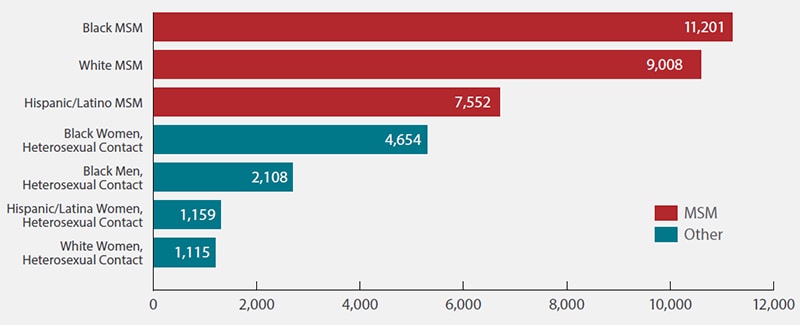
Jeśli chodzi o ilość zarażeń HIV/ zachorowań na AIDS mężczyzn walących się z mężczyznami (Men Sexing Men, w skrócie MSM) to na stronie http://www.cdc.gov/hiv/group/msm/index.html są takie dane:
Gay and bisexual men are more severely affected by HIV than any other group in the United States.
Among all gay and bisexual men, black/African American gay and bisexual men bear a disproportionate burden of HIV.
From 2008 to 2010, HIV infections among young black/African American gay and bisexual men increased 20%.
(...)
Gay, bisexual, and other men who have sex with men (MSM)a represent approximately 2% of the United States population, yet are the population most severely affected by HIV. In 2010, young gay and bisexual men (aged 13-24 years) accounted for 72% of new HIV infections among all persons aged 13 to 24, and 30% of new infections among all gay and bisexual men.
(...)
The large percentage of gay and bisexual men living with HIV means that, as a group, gay and bisexual men have an increased chance of being exposed to HIV. Results of HIV testing conducted in 20 cities as part of the National HIV Behavioral Surveillance System (NHBS) indicated that 18% of gay and bisexual men tested in 2011 had HIV and that HIV prevalence increased with increasing age.
(...)